How to Overcome Procrastination: Understanding Resistance and Taking Action

Procrastination is something we all experience at times. You decide something matters. You intend to do it. And yet, instead of starting, you delay. You make coffee. You scroll. You tidy. The task remains undone.
If you’ve ever wondered why procrastination happens — and how to overcome it — the answer may be simpler and more compassionate than you think.
What Is Procrastination?
At its simplest, procrastination is delaying something that you have already decided is important. There was a moment of clarity. A good intention. A decision to act.
Then resistance appeared.
Procrastination is not laziness. It is often a nervous system response to discomfort. Sometimes delay is appropriate — you may need more information, more space, or to complete other priorities first. But when avoidance becomes a pattern, there is usually an emotional component underneath it.
The Procrastination Loop
Most procrastination follows a predictable pattern:
1. The Intention
You decide to complete a task — start the project, make the call, organise the finances, write the article.
2. The Resistance
Anxiety, overwhelm, self-doubt, perfectionism, boredom, or rebellion arises. Thoughts such as “What if I can’t do this?” or “This is too hard” begin to surface.
3. The Avoidance
You delay. You distract yourself with other activities. The task remains untouched.
4. The Pressure
A low-grade tension builds. You know it still needs to be done.
5. The Turning Point
Eventually, it becomes more uncomfortable not to act than to begin.
6. The Relief
You complete the task and often realise it was easier than expected.
Then the loop resets.
What's Really Going on with Procrastination?
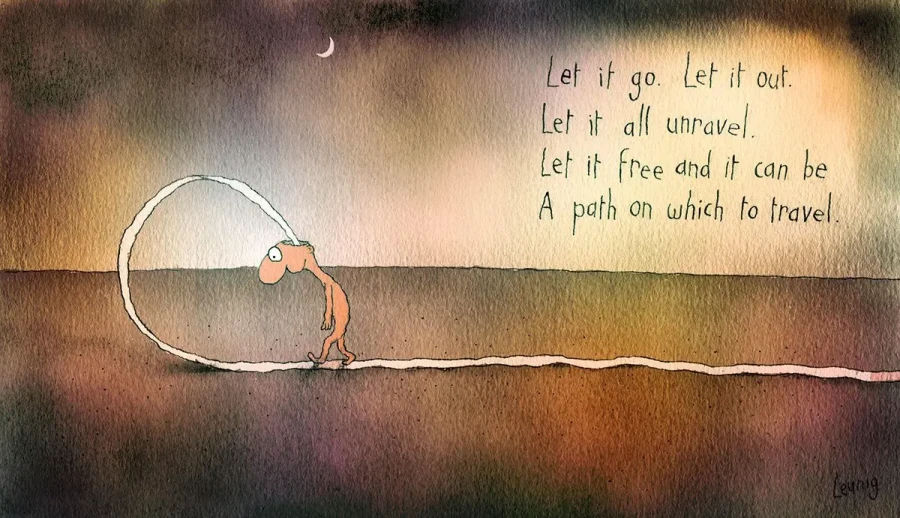
At the heart of procrastination is resistance — not to the task itself, but to the feelings we believe the task will create. Uncertainty. Inadequacy. Exposure. Boredom. Loss of control. Procrastination is often emotional regulation in disguise. It is an attempt to move away from discomfort.
When we understand this, we stop criticising ourselves and begin working with the underlying pattern instead.
How to Move Through Resistance
1. Feel It First
Before trying to motivate yourself, pause and acknowledge what is present. Say, “I’m feeling stuck,” or anxious, or overwhelmed. Naming the feeling interrupts the internal story.
Notice where the tension sits in your body. Chest. Stomach. Shoulders. Throat. Allow the sensation without trying to fix it. When feelings are acknowledged rather than resisted, they begin to soften.
2. Shift Your State
Change your posture. Take a deep breath. Sit upright or stand up. Then gently shift your internal dialogue. Instead of “What if I can’t?” try “What if this is easier than I think?” Even small belief shifts change your state — and your state determines your action. Watch my 3B’s Video Here.
3. Take One Clear Step
Ask yourself: “What is the ONE thing that will help me move this forward?” Not the whole plan. Just the next step. Open the document. Make the call. Write one paragraph. Set a timer.
Clarity creates momentum.
Hypnosis for Procrastination and Habit Change
If procrastination is a repeated pattern in your life, it may be rooted in subconscious beliefs or protective emotional responses. Hypnosis works at the level where these patterns are formed. Rather than forcing yourself into action with willpower, hypnosis gently updates the underlying belief and emotional response driving the resistance.
Habit change work strengthens new neural pathways, making action feel more natural and less pressured over time. Find out more about hypnosis here.
If you are ready to overcome procrastination at its root — whether in work, health, or personal goals — you are welcome to reach out and explore how hypnosis and structured habit change can support you.