Understanding the Drama Triangle
Many relationship conflicts follow a predictable pattern called the Drama Triangle. It was first described by psychologist Stephen Karpman. He said people unconsciously move between three roles when stress or conflict appears. These roles are:
Victim – Poor me
Rescuer – Let me fix this
Persecutor – It’s all your fault
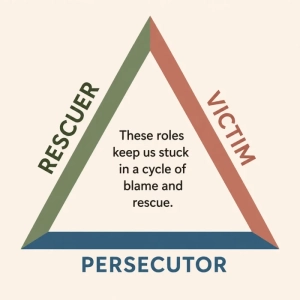
THE THREE ROLES
Victim
The key feature of the Victim role is feeling stuck or helpless. They feels powerless. Life feels unfair or overwhelming. They may believe they cannot change the situation.
Typical thoughts:
- “I can’t cope.”
- “Why does this always happen to me?”
- “Nothing works.”
Rescuer
The Rescuer jumps in to help or fix things. Helping is not the problem – the problem is doing too much for others.
Rescuers often:
- take responsibility for other people’s problems
- give advice that wasn’t asked for
- feel responsible for other people’s feelings
It can look kind, but it can also prevent people from learning to solve their own problems.
Persecutor
The Persecutor criticises, blames, or controls. They may appear harsh or impatient.
Typical statements:
- “This is your fault.”
- “Why can’t you get it right?”
- “You should know better.”
Sometimes people move into this role when they feel frustrated or overwhelmed.
PEOPLE MOVE AROUND THE TRIANGLE
A person does not stay in one role, they often rotate between them. For example:
A Rescuer who feels unappreciated may become a Persecutor.
A Persecutor who feels attacked may shift into Victim.
This movement is what keeps the drama cycle running.
THE ROLE OF ENABLERS
Sometimes another person in the drama triangle helps keep the pattern going. This is called enabling.
An enabler might:
- make excuses for someone’s behaviour
- avoid conflict
- protect someone from consequences
They usually believe they are helping but this can accidentally keep the unhealthy pattern in place.
THE “DISCOUNT” — HOW THE PATTERN STARTS
In psychology, a discount means dismissing, ignoring or minimising something important.
For example:
- ignoring your own needs
- pretending a problem isn’t serious
- believing you have no choices
- believing another person cannot change
Once people discount reality, the Drama Triangle often begins.
THE HEALTHIER ALTERNATIVE – THE EMPOWERMENT TRIANGLE
Psychologist David Emerald described a healthier pattern called the Empowerment Triangle. It replaces the drama roles with more constructive ones.
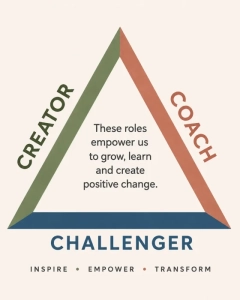 These roles are:
Coach – “How can I support you?”
Creator – “What can I do?”
Challenger – “I will be honest”
THE THREE EMPOWERMENT ROLES
Creator (instead of Victim)
A Creator focuses on solutions. Instead of asking:
“Why is this happening to me?” They ask: “What do I want to create here?”
They take responsibility for their choices and actions.
Coach (instead of Rescuer)
A Coach supports people without taking over. Instead of fixing the problem, they ask helpful questions.
For example:
- “What do you think would help?”
- “What options do you see?”
The Coach believes the other person is capable.
Challenger (instead of Persecutor)
A Challenger tells the truth and sets clear boundaries. They challenge someone to grow.
For example:
- “This behaviour isn’t working.”
- “I need something different here.”
The intention is not blame.
The intention is growth and accountability.
THE KEY IDEA
The Drama Triangle keeps people stuck in blame, rescue, and helplessness. The Empowerment Triangle encourages responsibility, support, and honest communication. When people recognise the pattern they can step out of the drama and move into healthier relationships.
A SIMPLE REFLECTION QUESTION
 When something difficult happens, ask yourself:
- Am I feeling like a Victim?
- Am I trying to Rescue?
- Am I blaming like a Persecutor?
And then ask: How could I respond as a Creator, Coach, or Challenger instead?
Here is a recorded process you can download and listen to, when you find yourself in a drama triangle. You might want to take out a pen and paper first to help you record what’s happening inside of you. You can pause the recording as often as you need. Here it is.
(ref chatGPT)